
The story of MTY Food Group begins in 1979 in Montreal, when Stanley Ma—a Hong Kong immigrant with a background in engineering—opened a single quick-service restaurant called Le Paradis du Pacifique.
Key realities at inception:
- Located in a shopping mall food court (high traffic, low marketing cost)
- Focused on Asian quick-service cuisine (underpenetrated at the time)
- Designed for speed, consistency, and scalability
The concept evolved into Tiki Ming, which became one of the earliest Asian fast-food chains in Canadian malls.
Strategic Insight #1:
MTY’s foundation wasn’t built on “brand first”—it was built on unit-level economics and operational simplicity.
2. The Pivot to Franchising: Unlocking Scale Without Capital Burn
By the 1980s and early 1990s, MTY began franchising aggressively.
Instead of owning every store, the company:
- Shifted to a franchise-first model
- Let operators invest capital
- Focused on systems, supply chain, and brand support
This decision changed everything.
Why this worked:
- Reduced capital requirements for expansion
- Enabled rapid rollout across malls
- Created recurring revenue via:
- Royalties
- Franchise fees
- Supply chain margins
Strategic Insight #2:
MTY mastered the asset-light franchise model early, long before it became mainstream.
3. The Real Growth Engine: Acquisition Strategy (Roll-Up Model)
MTY’s true inflection point came when it stopped building brands organically and started buying them.
Over decades, MTY acquired dozens of brands, including:
- Thai Express
- Cultures
- Sushi Shop
- Van Houtte
- Cold Stone Creamery (Canadian rights, later expanded)
- Papa Murphy’s (U.S.-based, major acquisition)
Today, MTY owns 90+ brands and operates 7,000+ locations globally.
Their acquisition playbook:
- Identify underperforming or plateaued brands
- Acquire at reasonable multiples
- Integrate into MTY’s centralized platform
- Improve:
- Supply chain
- Franchise support
- Cost structure
- Stabilize and scale
Strategic Insight #3:
MTY is not a restaurant company—it is a brand portfolio and cash flow optimization machine.
4. The Platform Model: Centralization as a Competitive Advantage
Unlike traditional franchisors, MTY built a shared services platform across all brands.
Core centralized functions:
- Procurement & supply chain
- Franchisee support systems
- Real estate and site selection
- Marketing infrastructure
- Back-office operations
This allowed MTY to:
- Achieve economies of scale
- Improve margins across all brands
- Reduce duplication costs
Example:
A small brand with 50 locations:
- On its own → struggles with purchasing power
- Inside MTY → benefits from system-wide scale
Strategic Insight #4:
MTY’s moat is not branding—it’s infrastructure and efficiency.
5. Food Court Dominance → Multi-Channel Expansion
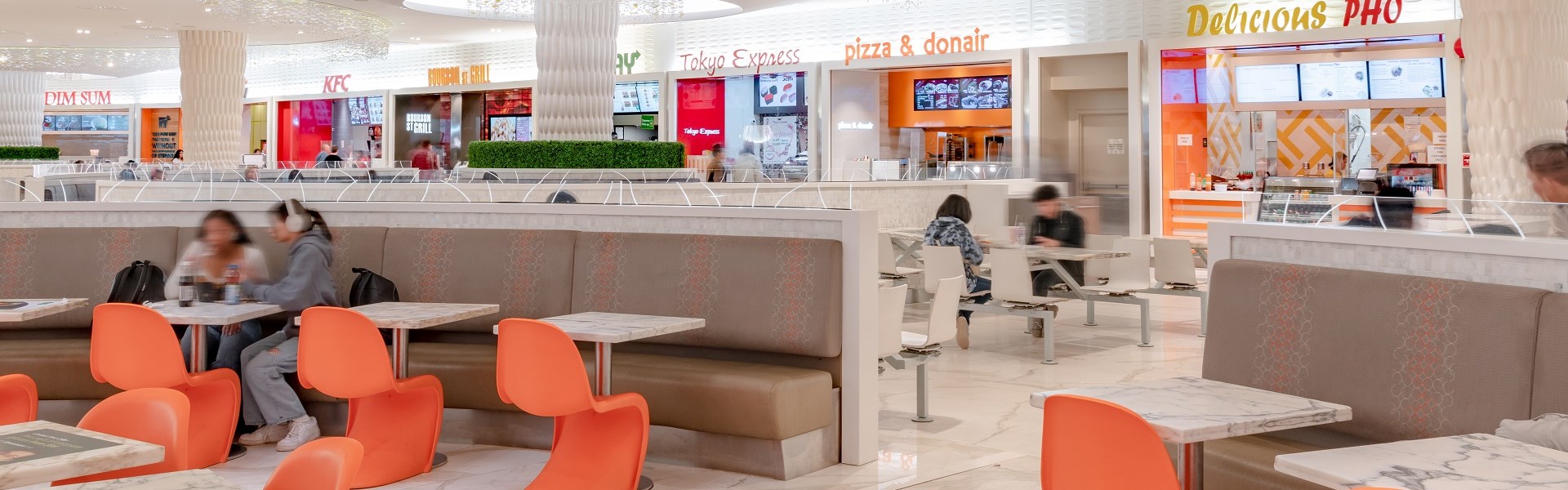
Initially, MTY dominated shopping mall food courts.
But as consumer behavior evolved, MTY adapted:
Phase 1: Mall dominance
- High foot traffic
- Low customer acquisition cost
Phase 2: Street locations
- Increased brand visibility
- Broader customer base
Phase 3: Non-traditional venues
- Airports
- Universities
- Hospitals
Phase 4: Digital & delivery
- Integration with delivery platforms
- Off-premise dining growth
Strategic Insight #5:
MTY doesn’t depend on one format—it follows traffic and adapts distribution channels.
6. Financial Discipline: The Silent Weapon
MTY’s success is deeply tied to financial conservatism and discipline.
Core financial principles:
- Strong focus on cash flow (not vanity growth)
- Disciplined acquisition pricing
- High-margin royalty-based income
- Low corporate overhead relative to system size
Unlike many restaurant groups:
- MTY avoids over-leveraging
- Maintains strong balance sheet flexibility
- Prioritizes sustainable EBITDA growth
Strategic Insight #6:
MTY wins because it treats franchising as a financial system, not just a food business.
7. Global Expansion: From Canada to International Markets
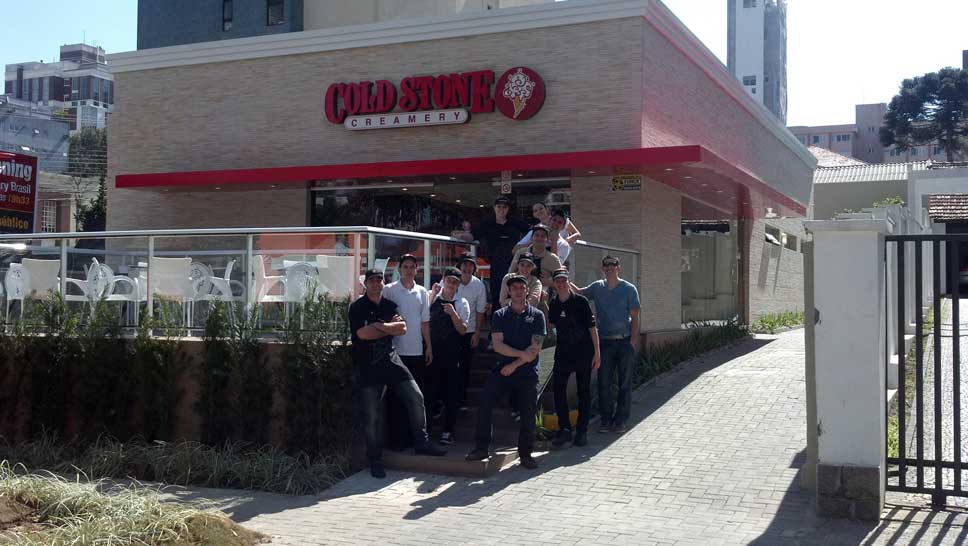
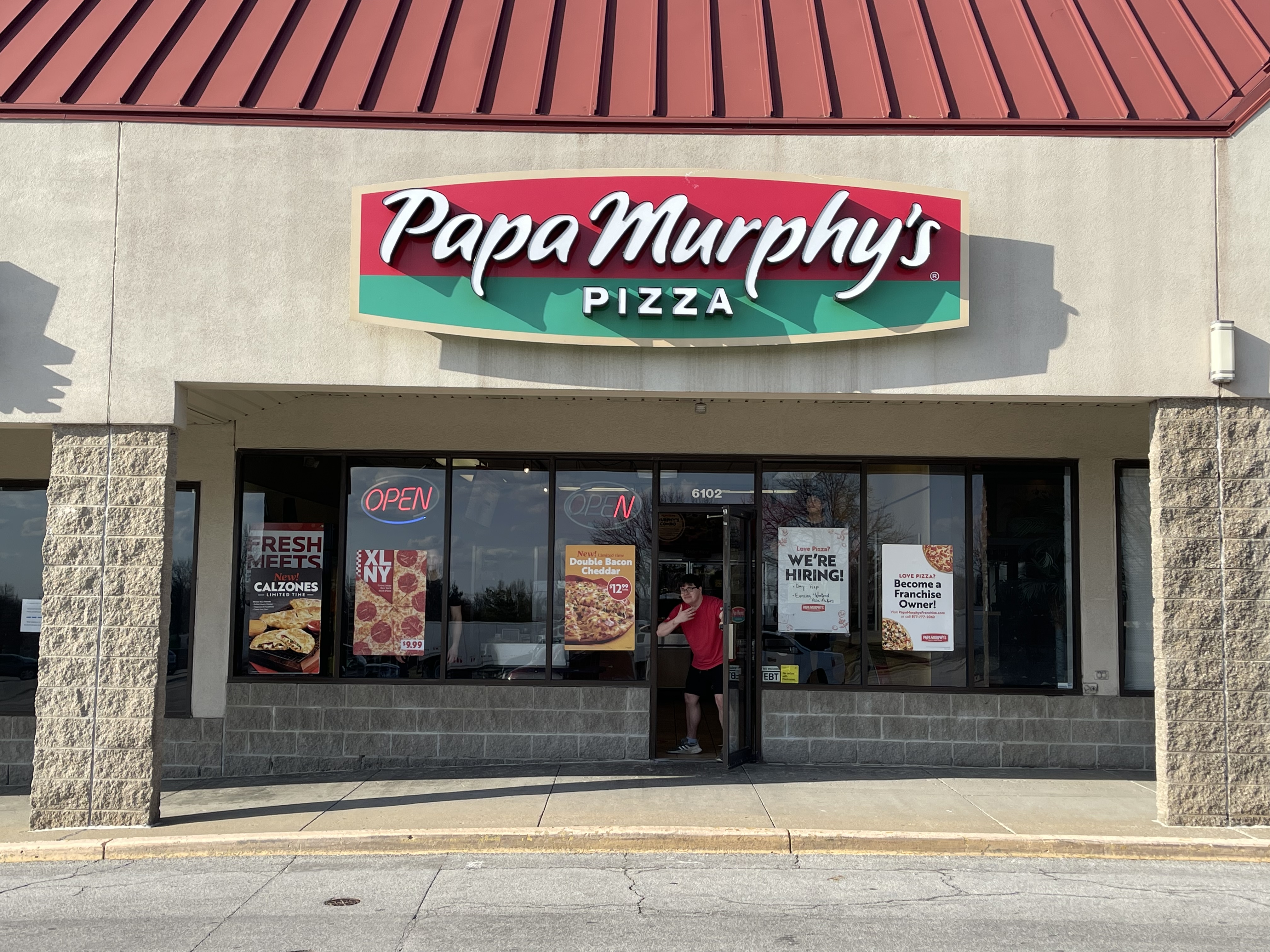
MTY expanded beyond Canada through:
- Acquisitions in the United States
- Select international markets
Key move:
- Acquisition of Papa Murphy’s significantly increased U.S. footprint
Today:
- Thousands of locations across North America
- Growing international presence
Strategic Insight #7:
MTY doesn’t “expand globally” in the traditional sense—it buys its way into markets with proven brands.
8. Franchisee Economics: The Backbone of the System
MTY’s long-term success is tied to franchisee survivability and profitability.
Key characteristics:
- Typically smaller footprint stores
- Lower build-out costs (especially food court models)
- Simplified menus and operations
- Strong support systems
This creates:
- Faster ROI for franchisees
- Higher franchisee retention
- Multi-unit operator growth
Strategic Insight #8:
Strong unit economics → multi-unit franchisees → accelerated system growth.
9. What Makes MTY Different From Other Franchise Giants?
| Factor | MTY Group | Typical Franchise System |
|---|---|---|
| Growth Strategy | Acquisition-driven | Organic expansion |
| Business Model | Portfolio of brands | Single brand focus |
| Core Strength | Cost efficiency & integration | Brand marketing |
| Risk Profile | Diversified across brands | Concentrated risk |
| Revenue | Royalties + system synergies | Mostly royalties |
MTY behaves more like:
- A private equity roll-up platform
- Than a traditional restaurant franchisor
10. Key Lessons for Franchisors, Investors, and Operators
1. Build for unit economics first, brand second
Without profitable units, scale collapses.
2. Franchising is a financial model, not just expansion
Recurring revenue > one-time sales.
3. Consolidation is a massive opportunity
Fragmented industries reward roll-up strategies.
4. Infrastructure beats hype
Systems win long-term, not marketing alone.
5. Diversification reduces risk
Multiple brands = resilience during downturns.
Final Take: MTY Group as a Case Study in Scalable Franchising
MTY Food Group represents one of the most underappreciated business models in franchising globally.
It didn’t win by:
- Building the “coolest” brand
- Spending the most on marketing
- Following trends
It won by:
- Relentless focus on cash flow
- Strategic acquisitions
- Operational efficiency
- Franchisee-driven scaling


Join The Discussion